
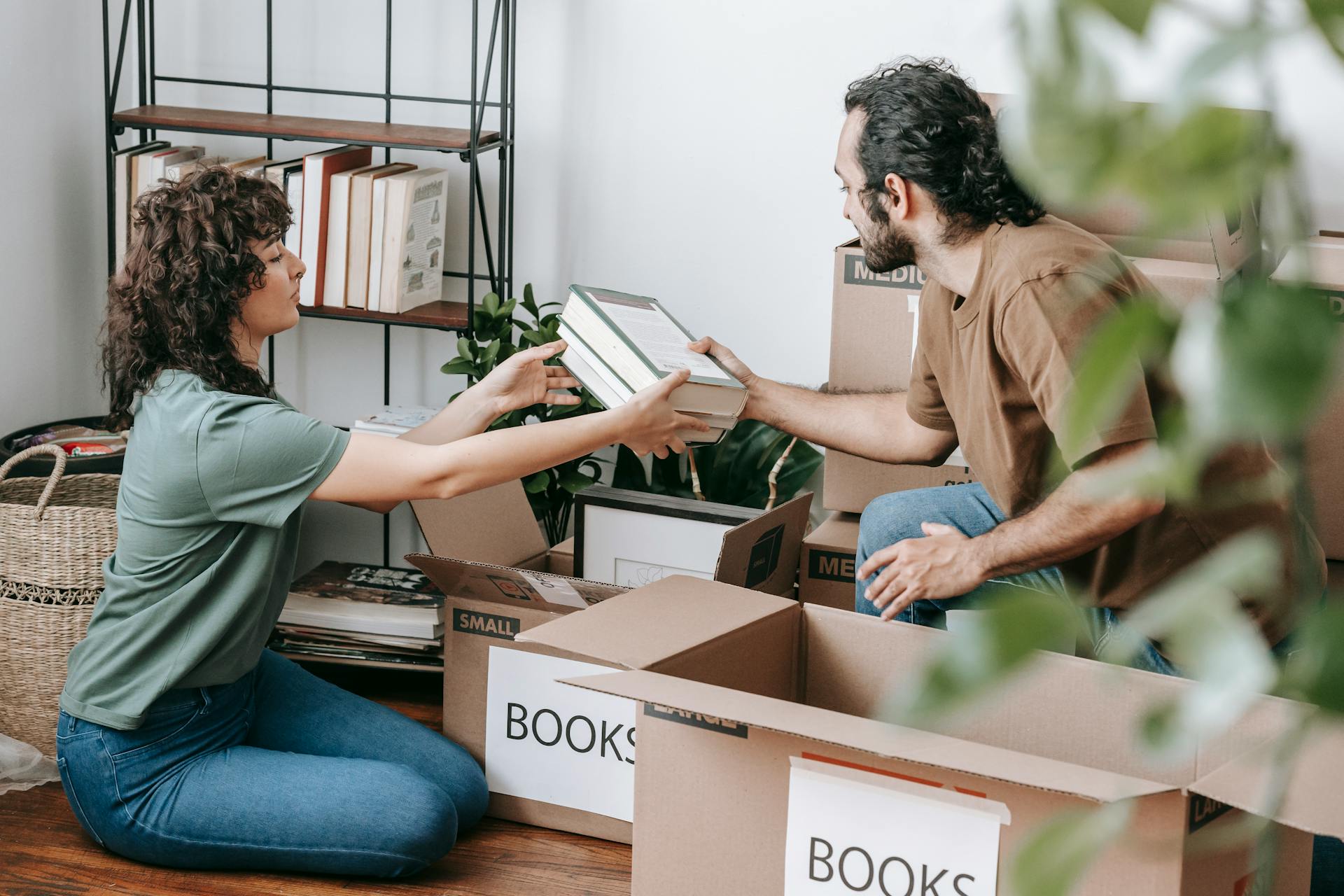
They are heavy, susceptible to water damage, and often a treasured item, so it is important to know the best way to pack books for moving.
Prepping for a big move and have numerous books to transport? We’re here to share our insider tips so you can pack books like a professional.
How to Pack Books for Moving: 6 Steps
- Organise Your Book Collection
- Get the Right Packing Materials for Books
- Choose the Best Boxes for Packing Books
- Sort Your Books
- Pack Books in Boxes
- Label Book Boxes Clearly
Step 1: Organise Your Book Collection
A few books isn’t a big deal but if you have a big library, you are looking at a lot of time and energy to move books. They can also be heavy to move.
If you can streamline your collection before moving, you’ll save time and hassle. Look through your books and decide which books are “must-haves” or sentimental in value.
Then consider if there are any books you haven’t read in 15 or 20 years. Or maybe older college textbooks you no longer need.
For books you no longer want, here are some places to donate used books to:
- Libraries
- Schools
- Churches
- Used-book retailers
- Friends and family
- Local charities
- Thrift stores
Step 2. Get the Right Packing Materials for Books
We recommend these packing materials for books:
- Small, clean, durable boxes (more on this in Step 3)
- Heavy-duty packing tape
- Sharpies
- Packing paper (we recommend acid-free tissue for wrapping books, especially cherished books)
- Bubble wrap
Step 3. Choose the Best Boxes for Packing Books
One of the biggest mistakes we see people make when packing books is using the wrong boxes. Grabbing any cardboard box for packing books can end in disaster.
Sturdy and high quality boxes are a must-have for packing books. Many people opt to use bankers’ boxes as they are sturdy and have handles. You can also buy specific book moving boxes that are sturdy, smaller in size, and meant to handle the weight of books.
We also see people use huge boxes for packing books. While it may be tempting to pack as many books as possible into a box, this can get incredibly heavy.
Choose smaller boxes for packing books to keep the total weight around 18 kg or below. We usually recommend boxes around 12” x 12” x 12” in size. We also recommend looking for boxes with tri-walled corrugate to ensure sturdiness. Some boxes also list how much weight they are rated to hold.
Step 4. Sort Your Books
Sorting can make unpacking far easier. How you choose to categorise your books will be up to you.
Here are some ideas for sorting books:
- By author
- In alphabetical order
- According to genre (thriller, mystery, romance, etc.)
- Fiction vs Nonfiction
- Paperback vs hardcover
Sorting books by size can also be helpful for packing and unpacking. Packing books of the same size makes it easier to create neat stacks with each book with minimal wasted space.
Step 5. Pack Books in Boxes
Here is how to pack books in boxes:
- Line the box with several sheets of packing paper to add cushioning
- Individually wrap each book with packing paper, especially old or fragile books
- Place the books in the box neatly and snuggly but do not pack them too tightly
- Pack books flat and stacked or upright (as if they are on a bookshelf). Placing books spine-up can cause them to warp under their own weight and damage the binding. Packing books spine-down can cause the pages to warp.
- Fill in gaps with crumpled up packing paper or bubble wrap
- Place heavy books on the bottom and lighter books on top to prevent the lighter books from getting crushed
- Secure any seams (especially on the bottom of the box) with high-quality packing tape
We always emphasise that it is easier and safer to carry 5 lighter boxes than 1 heavy box. This is especially true if you have to go up and down any stairs.
6. Label Book Boxes Clearly
Label each box clearly and in large letters with a sharpie. Don’t just label a box “books”. If you have an extensive library, you can label boxes according to content (i.e. by author or genre).
You can also label book boxes with “Fragile” or use arrows to indicate “This Side Up”.
Do’s and Don’ts of Packing Books for Moving
Here are some DO’s and DON’TS to help you pack books for moving:
| DO | DON’T |
|---|---|
|
|
Packing Hardcover vs Paperback Books
Hardcover Books
- Pack hardcover books standing upright with the spine against the sides of the box
- You can also stack them flat to pack them if they are similar shapes and sizes
- Don’t pack hardcover books too tightly
- Sort into similar sizes and shapes for packing
- Use scrunched packing paper to help pad the books and keep them upright
- Small pieces of cardboard can be used between each book to help protect them and keep them in place during the move
Paperback Books
Here are some considerations to keep in mind when packing paperback books:
- Pack them flat and stacked to help prevent the pages from getting bent
- Do not pack paperbacks with the paper side facing up as this can cause the pages to bend or tear
- Try to pack books of similar sizes in one box
- Place heavier books on the bottom and lighter books on the top

Tips for Packing Books for a Move
- Get a Head Start — Packing books is best done a week or two before your move. This allows ample time to organize and pack books properly and gets some of your packing done ahead of time. View our Interactive House Moving Checklist for a clear packing timeline to follow when moving.
- Avoid placing cherished books on the outside of a box (this will help protect the books if the box gets dropped)
- Consider packing a rolling suitcase with boxes — the wheels make loading and unloading far easier!
- Fill boxes part way with books and pack the rest of the box with lightweight items (towels, pillows, or clothes) — the boxes will be lighter and cushioned, and you’ll get some other items packed at the same time
- Place heavier boxes on the bottom of the moving truck and lighter boxes on top
- If your books will be in storage, be sure the facility is cool and dry
- Rent a dolly to make it easier to haul book boxes
What Is the Easiest Way to Pack Books for Moving? Hire a Professional Moving Service!
The best way to pack books for moving is by using designated, sturdy boxes, stacking books properly, and making sure not to overload boxes.
If you want to skip the prep work, heavy boxes, and risk of bent pages or water damage, consider hiring white glove removalists.
With years of specialised experience moving luxury, fragile items throughout Sydney’s Eastern suburbs and Lower North Shore, we have the expertise and materials for safely packing books.
Arrive at your new home and relax as your books are delivered safely and free of damage. With our end-to-end moving service, you can sit back and decide which book you want to read next rather than packing books, hauling boxes, and unloading.
If you have questions or are looking for reliable AFRA Accredited Removalists in Sydney, please give our team a call on 1300 174 907.